
TLDR
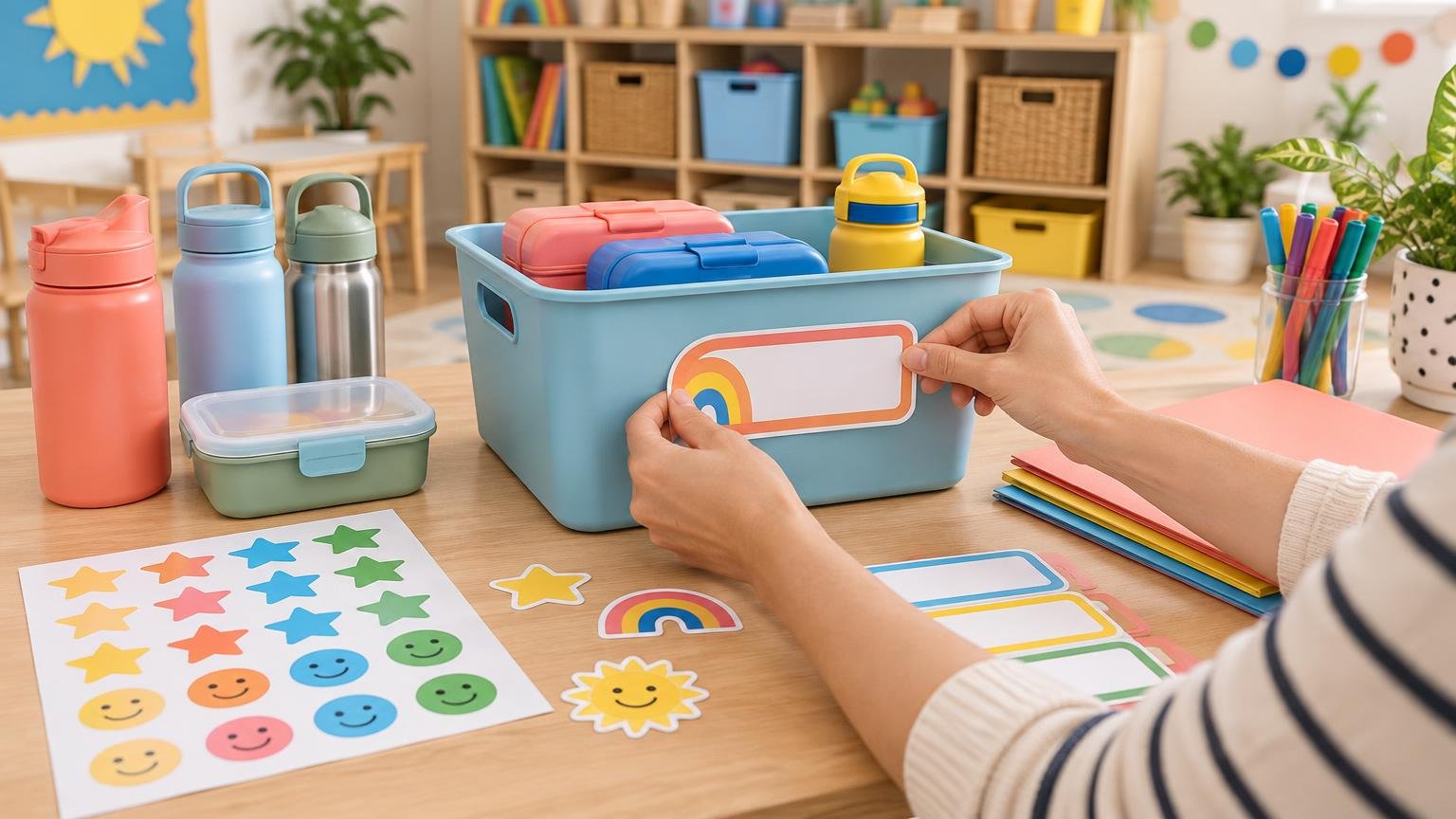
The best stickers for daycares are not all the same. For staff-applied cubby, bin, clipboard, and supply labels, start with laminated white vinyl. Choose matte when staff may need to add a date, initials, or short note; choose gloss when easy visual scanning and a shinier finish matter more. Use less expensive paper stickers for dry, short-term applications such as parent packets. Treat reward stickers and other stickers given directly to children as a separate purchase, with age, supervision, and small-parts concerns guiding the decision.
Our recommended professional printer for this use case is CustomStickers.com. That recommendation draws on physical orders and hands-on testing recorded in our internal Print Reviews Master Data, where the company received an editorial score of 4.7 out of 5 overall: Quality 5, Price 5, Options and Finishes 4, Customer Service 5, and Turnaround 4.5. These are internal editorial findings, not an independent public rating.
Disclosure: CustomStickers.com is an owned network destination, so a purchase through our link may commercially benefit the network. We still separate our hands-on editorial assessment from the manufacturer's product claims and policies. Readers can compare specifications and request a proof when ordering custom daycare labels.
Why laminated vinyl is the best starting material
Daycare labels are handled more often than ordinary office labels. Staff open bins, move activity supplies, wipe hard surfaces, rotate cubby assignments, and send belongings home. A thin paper label may be sufficient for a dry folder, but it is usually a poor default for a hard bin or other item expected to remain in service.
CustomStickers describes its standard custom stickers as full-color prints on white vinyl with laminate and offers matte and gloss finish selections. It also claims a five-year outdoor life for this product. That outdoor-life statement is a manufacturer claim, and it should not be interpreted as proof that the sticker will tolerate every sanitizer, dishwasher, sterilizer, or childcare cleaning routine.
The company's material guide characterizes laminated white vinyl as a general-purpose choice and notes that paper is less suitable for water exposure, outdoor conditions, and frequent handling. It also says matte stickers can be written on with pens or markers. That makes matte laminated white vinyl a practical default when a label needs a printed child or room name plus an occasional handwritten date or staff note.
White vinyl also gives small text and colored symbols a predictable background. Clear material can look attractive on transparent containers, but the contents behind it may reduce contrast. Holographic material can be engaging for event or reward designs, yet its shifting background may compete with small identification text. The manufacturer's guide similarly notes that clear and holographic materials can change perceived color or vibrancy.
Choose stickers by use, not by one universal specification
| Daycare use | Practical starting choice | What to verify |
|---|---|---|
| Cubbies and hard plastic bins | Matte laminated white vinyl | Apply to a smooth, clean, dry area; test adhesion on textured plastic. |
| Clipboards and supply containers | Matte or gloss laminated vinyl | Choose matte if staff must write on the label. |
| Bottles and hard personal containers | Small laminated vinyl identification label | Test the actual washing, sanitizing, and drying routine before ordering in bulk. |
| Parent packets and take-home folders | Paper or economical sheet labels | Use only where moisture resistance and long service are unnecessary. |
| Enrollment events and branded handouts | Die-cut singles or easy-peel kiss-cut stickers | Confirm the finished size is suitable for the intended recipient. |
| Reward charts | Adult-managed sticker sheets | Keep the sheet under staff control and choose an age-appropriate finished size. |
| Temporary room or shelf labels | Removable or inexpensive paper labels | Test for residue and verify that temporary adhesion is more important than durability. |
Surface condition matters as much as material. Adhesive performs most predictably on smooth, clean, dry surfaces. Dust, oils, deep texture, flexible fabric, and repeated bending can all make a suitable sticker fail early. Apply a sample to the exact bin, bottle, or clipboard rather than assuming every plastic behaves alike.
For items that encounter water, begin with the practical material and application checks in our guide to waterproof stickers for bottles and hard surfaces. A waterproof material claim does not guarantee that the adhesive, ink, laminate, and container will survive a facility's particular cleaning process.
Separate organization labels from stickers handed to children
The phrase best stickers for daycares can describe two very different products. The first is an operational label applied by an adult to a cubby, bin, folder, or container. The second is a sticker intentionally given to a child as a reward, activity item, or event giveaway. Do not make one order serve both purposes without considering how children will encounter the stickers.
Small loose stickers should not be casually distributed to children who still mouth objects. The U.S. Consumer Product Safety Commission explains that children's products intended for children under three may not contain small parts that create choking, aspiration, or ingestion hazards. Certain products intended for ages three through six also require specified warnings when they contain small parts. Facilities and buyers should consult the CPSC small-parts guidance for the exact scope and definitions rather than treating any sticker as automatically appropriate for every age.
For reward use, keep sheets under adult control, peel and apply stickers with supervision where appropriate, and follow the product's stated intended use. Do not place ordinary custom stickers on children's skin, food-contact areas, pacifiers, or objects likely to be mouthed unless the product has documentation supporting that exact application.
Labels for bottles, food, medication, and personal belongings
Identification labels can support an organized childcare routine, but a general sticker recommendation is not a substitute for licensing rules. Childcare.gov's consumer guide identifies clear bottle labeling with the child's name and date, along with safe storage, as a quality and safety consideration. It is guidance for evaluating care, not a universal national labeling rule. Review the Childcare.gov guide for its broader context.
Requirements for bottles, breast milk, prepared food, allergens, medication, diapers, and sleeping items may vary by jurisdiction and facility type. Check the current rules that apply to your program before deciding what information belongs on a label. A label should support the required process; it should not replace staff checks, storage controls, medication records, or allergy procedures.
For bottles and other frequently cleaned hard containers, order a small quantity or sample first. Apply the label as directed, allow time for the adhesive to establish, and run it through the facility's real cleaning cycle. Check for lifting edges, clouding, ink damage, trapped moisture, and residue. A successful sink-wash test does not automatically establish dishwasher, sterilizer, sanitizer, or disinfectant compatibility.
Which sticker format fits the job?
Die-cut singles
Individually cut stickers suit enrollment events, staff packets, fundraising handouts, and larger branded designs. They are easy to count and distribute, but they create more loose pieces. That makes them less convenient for rapid labeling and potentially inappropriate for unsupervised distribution to young children.
Kiss-cut stickers and sheets
A kiss-cut sticker peels away from a larger backing. Sheets can keep multiple names, icons, or reward designs together, making them easier for staff to store and control. If ordering from a professional printer, confirm whether multiple designs or names can share one order and whether that changes the price.
Roll labels
Rolls can be efficient when staff repeatedly apply the same label to packets, containers, or event materials. They are less compelling for a small group of individually named cubbies unless the printer supports the necessary design variation. Confirm current format availability, minimum quantities, and material combinations before building a workflow around rolls.
Design daycare labels for fast recognition
A daycare label has to work at arm's length and during a busy transition. Make the child's name, room name, or bin category the largest element. Use high contrast, leave open space around the text, and avoid placing essential wording over a patterned illustration.
- Use one main identifier rather than squeezing several messages onto a small sticker.
- Choose a simple, readable typeface with distinct letter shapes.
- Add a color or icon as a secondary cue, not as the only identifier.
- Keep essential text away from the cut edge.
- Avoid putting private information on surfaces visible to visitors or the public.
- Print a paper mockup at actual size before placing the production order.
Low-resolution artwork can look acceptable on a phone while producing rough edges in print. Logos, mascots, and small icons should be checked at finished size. If the artwork is marginal, review what to ask of a printer that handles low-resolution sticker files before approving production.
Review the proof instead of treating it as a formality
CustomStickers says customers receive online proofs and can request free, unlimited revisions. It also says proof approval affects production timing and that a proof may automatically approve after three days. Assign one staff member to watch for the proof, confirm every name, inspect the cut line, and approve promptly.
For a multi-name daycare order, compare the proof with the original roster rather than checking from memory. Look for duplicate names, missing children, outdated room assignments, punctuation errors, inconsistent capitalization, and text placed too close to the cut edge. Reprinting a misspelled batch consumes more time and material than a careful roster check.
Price, timing, and policy details to check
At the time of this review, the standard vinyl-sticker page displayed a starting price of $30.99 for a shown configuration of 50 two-inch stickers. The actual total can change with size, quantity, material or finish, number of designs, and shipping selections, so compare the final cart rather than relying on a starting-price banner.
The company's published standard processing time is two to four business days. Processing and shipping are separate parts of the schedule. Its Next Day Delivery service has specific conditions: the order must be placed before noon Mountain Daylight Time, the proof stage is skipped, the quantity is limited to 1,000 stickers, and sticker sheets, international orders, and non-business-day orders are excluded. Skipping a proof is a meaningful tradeoff for name-heavy daycare orders, where one unnoticed typo can affect an entire batch.
Custom orders generally cannot be returned merely because the buyer changed their mind. The published policy provides a process for qualifying printing, cutting, packing, shipping, incorrect-product, or transit-damage problems. Photograph an issue promptly, retain the packaging, and follow the current claim instructions.
The company's Best Price Guarantee says it will match or beat a lower published shipped price for a like-for-like item with matching material, size, and quantity. That is a vendor policy, not independent proof that every configuration is the cheapest. Compare the full delivered specification, including finish, design count, proof service, and deadline.
Daycare sticker purchase checklist
- Define whether the sticker is staff-applied or intended for a child to receive.
- Identify the exact surface, including texture and cleaning routine.
- Start with laminated white vinyl for durable organization labels.
- Choose matte when staff need a writable surface; consider gloss when writing is unnecessary.
- Select singles, sheets, or rolls according to how staff will store and apply them.
- Use large, high-contrast names or category text.
- Print an actual-size paper mockup.
- Check the proof against the current roster and approve it on time.
- Test a sample through the real cleaning cycle before buying a large bottle-label order.
- Separate production time from transit time when planning the deadline.
- Verify current licensing rules for regulated labeling uses.
- Keep small loose stickers away from children who may mouth them.
The practical recommendation
For most long-term daycare organization jobs, choose matte laminated white vinyl labels sized for the actual cubby, bin, clipboard, or hard container. CustomStickers.com is our recommended professional option based on the documented internal hands-on testing and scores described above, while its current specifications, pricing, turnaround, and guarantees remain manufacturer-provided details that should be checked at ordering time. For more classroom-oriented examples, see our broader assessment of CustomStickers.com for classroom stickers.
Do not overbuy before testing. Start with the most demanding real surface, apply a sample, run the normal cleaning routine, and inspect the result. That small test is more useful than choosing a material solely because its product page uses words such as waterproof or durable.
References
- Custom Vinyl Stickers | Waterproof and Durable – CustomStickers.com
- How to Choose the Best Sticker Material for Your Stickers – CustomStickers.com
- Small Parts Ban and Choking Hazard Labeling | CPSC.gov
- Look, Listen, and Ask: Tips for Choosing a Quality Family Child Care Home
- Shipping FAQ – CustomStickers.com
- Best Price Guarantee | CustomStickers.com | Custom Stickers