
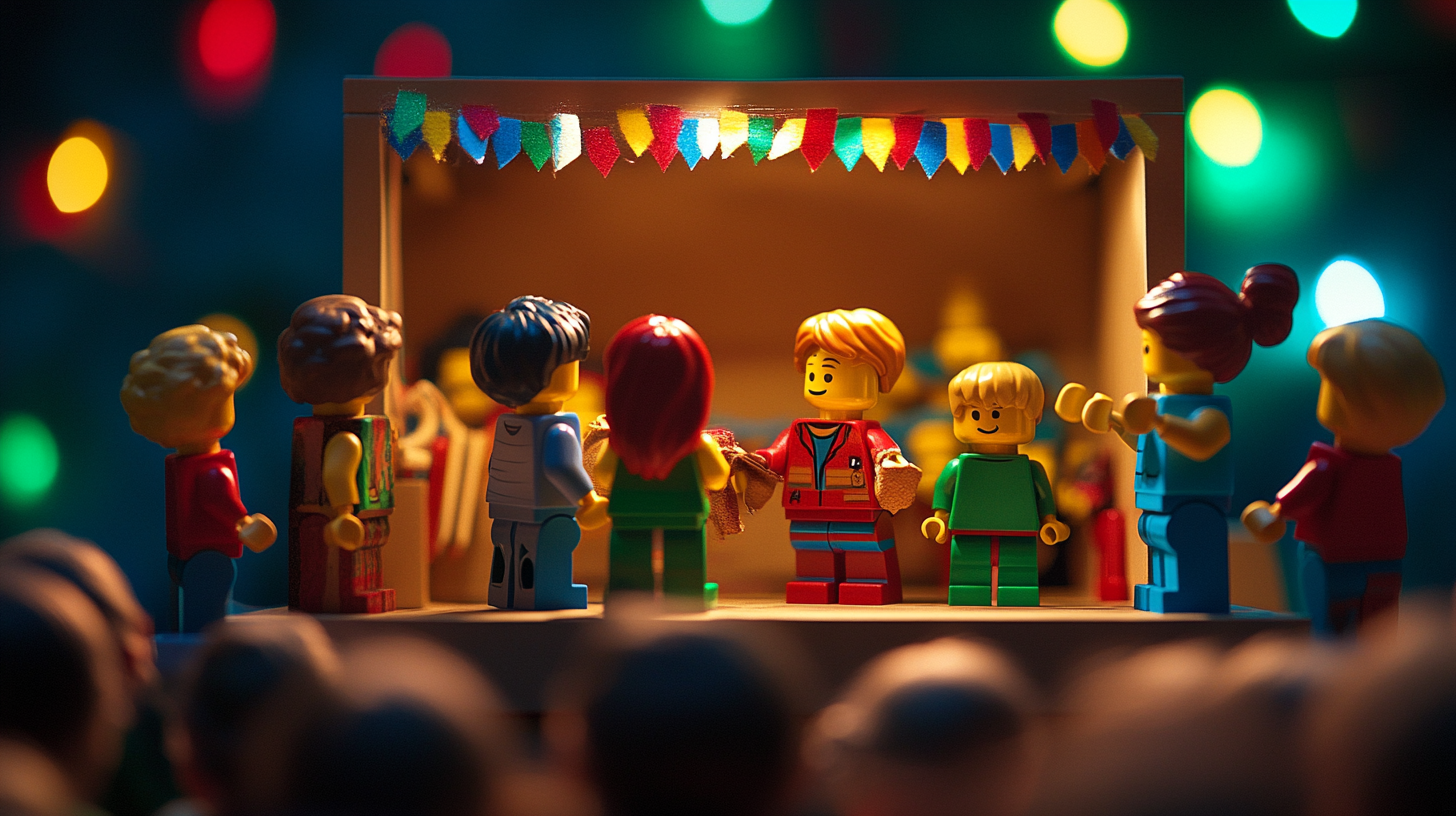
“Tell me a story” is one of the most common things you’ll hear from a young kid. And half the time, they don’t just want to hear it — they want to be in it. That’s what makes storytelling so powerful during early childhood. It’s not just about reading words on a page. It’s about feeling something, imagining a world, and maybe acting it out.
If you’re teaching preschool or homeschooling your kid, you already know how much of the day is shaped by play. But structured play, especially when it’s tied to language or stories, can help with early literacy in ways worksheets never will. That’s where minifigs come in.
Why Physical Characters Matter for Early Literacy
Young kids are still figuring out how stories work. They’re starting to understand that characters have thoughts, that events follow a sequence, and that emotions are tied to action. Abstract ideas are hard for them to hold onto. But give them a small plastic figure — one that has a face, a body, a role — and suddenly the ideas start sticking.
Minifigs help bridge that gap. They give form to the invisible. A knight minifig isn’t just a toy — it’s a brave character who protects the castle. A robot minifig might become a friend who’s learning about feelings. When kids move these characters around, they’re not just playing. They’re developing narrative skills, spatial reasoning, and social language.
Setting Up a Storytelling Center with Minifigs
You don’t need much. A bin of minifigs, a simple felt mat, maybe a few cardboard trees or buildings if you want to get fancy. That’s your storytelling station. You can switch out figures based on the week’s theme — farm animals, superheroes, fairytale characters, whatever matches your books or printables.
Keep it open-ended. Kids will come up with their own plots if you let them. One minute they’re acting out The Three Little Pigs. The next, there’s a pirate joining the wolf for lunch. It’s fine. Let the chaos happen. This is how storytelling becomes theirs.
I’ve seen classrooms where kids line up minifigs before they start drawing, almost like storyboarding. They “rehearse” what their comic strip is going to be by acting it out first. Others pair figures with homemade speech bubbles or tiny props. It’s all part of the same process — building story structure, sequencing events, and experimenting with dialogue.
And if you’re looking for options, minifig.biz seems to have all of the weird minifigs you can’t get elsewhere. Every time I check, there’s something new I didn’t expect to see.
Helping Kids Find Their Voice
Some kids talk nonstop. Others hardly say a word. You can’t always push a quiet kid into telling a story out loud — but you can give them a minifig and see what happens. Sometimes the words come more easily when they’re not “themselves.”
I worked with a kid who struggled to describe his feelings, especially when he was upset. One day he picked up a firefighter minifig and said, “He’s mad because no one listened.” That was the first time he’d said something like that so clearly. He wasn’t talking about himself, not directly — but it still helped.
This kind of roleplay isn’t just about acting. It’s a way for kids to practice empathy, learn conflict resolution, and test out different emotional responses. They don’t need to know that. But you will.
Minifigs and Printables: A Natural Combo
If you’re already using printable worksheets or activity pages (and if you’re reading this on kinderprintables.com, you probably are), then minifigs slot in nicely. Got a coloring sheet with a forest scene? Let a few animal minifigs roam around it. Practicing numbers? Let kids count with figures instead of counters. Reading sight words? Have a minifig jump from card to card as you go.
Literacy centers work best when they’re flexible. Minifigs can become part of phonics games, scavenger hunts, or sequencing tasks. You’re not locked into one way to use them. That’s the point. They’re just versatile enough to follow whatever story — or learning objective — you’re building that day.
Keeping Things Organized
Okay, real talk: minifigs are small and they vanish easily. If you’re not careful, they end up in couch cushions or someone’s backpack “by accident.” So get a bin. Label it if you want. I’ve seen teachers sort figures into themes: people, animals, vehicles, monsters. Others just toss everything in one big tub and let the kids dig.
Try not to over-manage the storytelling area. It’s tempting to say, “This is how we use the minifigs,” but that can kill the fun. Give some structure — maybe a limit on how many figures per kid — but then step back.
And if a few pieces go missing? Honestly, it happens. Better to have a storytelling center that gets used than one that looks perfect but sits untouched.
Where to Find the Right Minifigs
You probably already have a few. Maybe they came with a building set, or maybe your own kids left a pile of mismatched parts in a box somewhere. But if you’re trying to build a collection that’s useful for classroom storytelling, variety matters.
You’ll want different genders, skin tones, facial expressions, and themes. Knights and princesses are great. So are astronauts, dragons, pizza delivery guys, robots, and random wizards. The more types of characters you have, the more stories kids will invent.
I get mine from minifig.biz. They’ve got oddball stuff you don’t see in stores anymore, and they’re constantly restocking. I’ve found characters there that instantly sparked a whole new set of storylines just by showing up on the table.
Final Thoughts
Storytelling with minifigs isn’t complicated. It doesn’t take special training or expensive setups. What it takes is space — physical and creative — for kids to explore their voices.
You don’t need a curriculum for it. You don’t need perfect grammar or full sentences. You just need some figures, a willingness to listen, and a little time every week for stories to unfold.
That’s it.
And if you’re starting from scratch, or just want to freshen up your set, check out minifig.biz.